
Being ill or not feeling well?
Being ill and not feeling well can feel almost indistinguishable – yet they often ask different things of us. The difficulty is this: I cannot always tell the two apart, and my body does not always give me a clear answer.
So this is not a rule, but how I handle that uncertainty: when I practise, when I rest and when I would rather get it checked.
Being ill
Sometimes illness is unmistakable. Fever, chills, an infection – the body is burning up and visibly fighting a battle. Something has got in, or something has tipped out of balance, and the system is working with all its strength to restore that balance.
In those moments, I do not practise. No Qi Gong, no meditation, no feeling inwards – not even gently.
My task then is not to set another process in motion, but to rest: warmth, sleep and time. Whatever is happening does not need any additional practice from me.
I feel that pull too. Especially when I am ill, something in me wants to practise, wants to do something. And perhaps letting go is precisely the hardest – and most honest – practice.
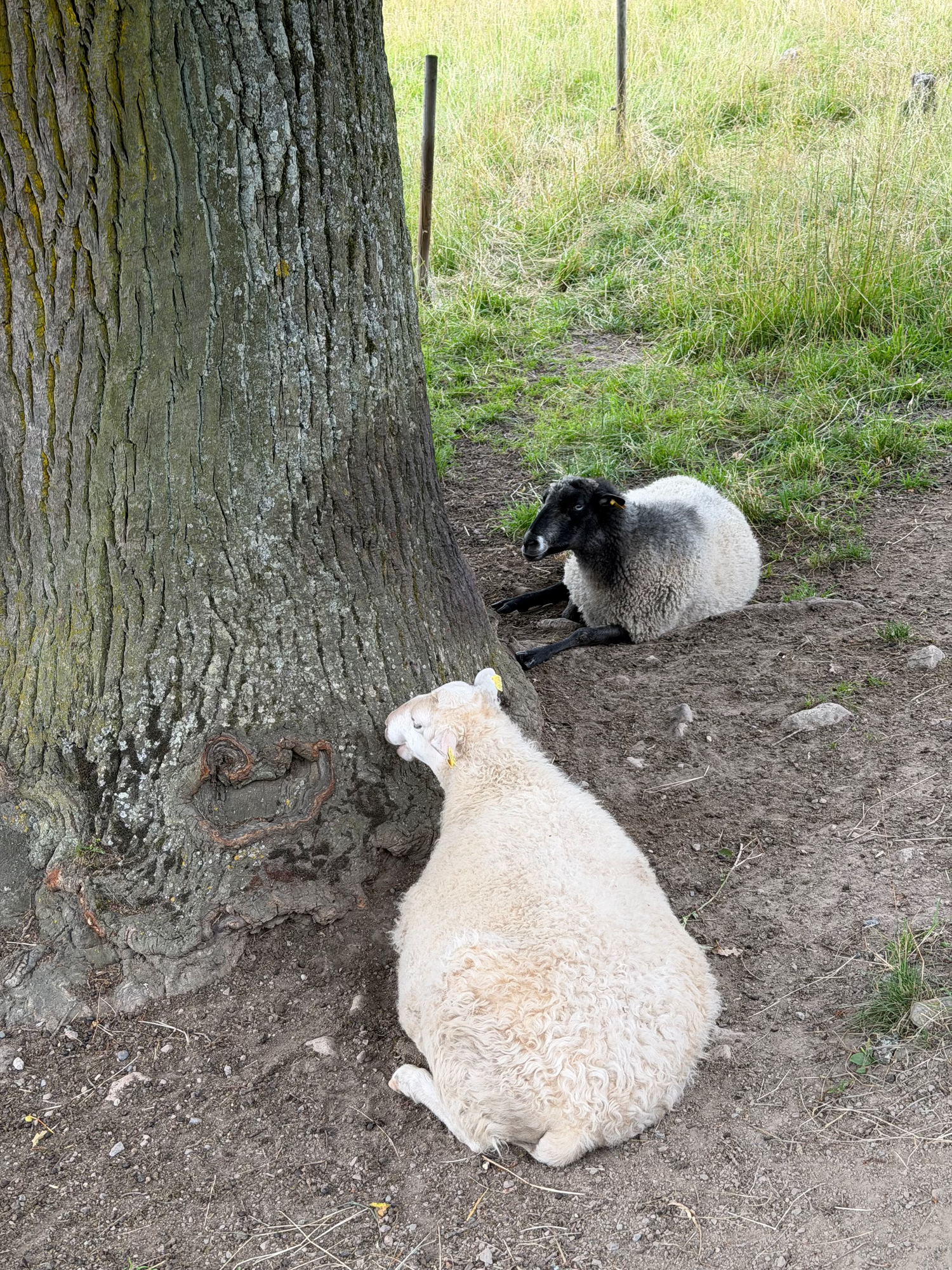 Animals rest when the body needs it – without questioning, without struggling.
Not feeling well
Feeling unwell is something different. Often there is no clear name for it yet. And yet something is not right.
Sometimes it is quiet: a heaviness that stays, a tiredness that sleep does not take away, an emptiness you feel in part of your body, a sense of not quite being yourself. Sometimes it makes itself known loudly too – a throbbing head, a dull restlessness, an exhaustion that fills the whole body.
Often this is not an acute battle with illness, but an imbalance – perhaps an early sign, or the result of too much for too long. And when it is mild and familiar, practice can be helpful. Usually very gently: conscious breathing, calm movement, a little Qi Gong as a way of caring for yourself. This can allow the system to find its balance again before anything becomes entrenched. And if you feel your body becoming clearer and more stable as you do this, you can cautiously continue moving. But the body’s response does not always come straight away. Sometimes it is only the next day that you realise something was too much – with persistent exhaustion, such as in ME/CFS, often only hours or days later. So take small steps, and the next day’s response counts too.
Sometimes it even takes the opposite: vigorous, demanding practice that breaks through sluggishness and gets something moving that has been stuck for a while. But that belongs in a body that can handle it – not with a throbbing head, not with deep exhaustion. There, force is not the way.
Sometimes, though, the lightest touch of care.
That quiet, familiar feeling of being unwell is not a disturbance. It is an invitation.
When you are not sure
And this is where it becomes clear why the distinction offers only a guide, not a rule: you cannot always tell the two apart. Tiredness, exhaustion, a heavy head – they may be a harmless strain or the quiet beginning of something. The body does not always give us a clear answer.
That is why loudness is not a reliable compass. Feeling unwell can be loud; an illness can begin quietly. And practice is not a tool for finding out what is going on – it cannot reliably answer that question and may even mask some signs.
If you are unsure, choose the gentler path. If it is clear and acute, rest. If it is mild and familiar, proceed cautiously and see how your body responds. And if it is new, strong or unfamiliar, the mat is not the right place – have it checked by a doctor.
Practising also means learning to feel
Perhaps this is the most valuable part of practice. Not the exercise itself – but the sensitivity it gives you.
Over time, you sense more subtly. You notice sooner when something tips out of balance. And you also notice when your body does not need practice, but rest – or a doctor. Distinguishing between doing, cautiously trying things out and resting is itself a piece of wisdom.
It is not about a formula, but about listening.
And one last thing: this is my understanding of these things today – nothing more. I am still exploring them myself, feeling my way, day by day. Perhaps I will see some things differently tomorrow. So take this not as a rule, but as an honest account of where things stand from someone who is still on the way too.